Key points
- UAE workshops commonly quote two to three years for a starter battery. This is trade experience, not a published study.
- Heat speeds up grid corrosion, water loss and self-discharge, the three things that wear a lead-acid battery out.
- Summer does the damage, but the failure often shows up later, after a cooler morning or a week parked.
- Short trips with the AC on full and long periods parked keep the battery partly charged, which shortens its life.
- From the second year, test the battery once a year so you replace it on your schedule and not at the roadside.
How long a car battery lasts in the UAE
There is no published UAE study we can point to, so treat any single number with care. UAE workshops commonly quote two to three years for a starter battery, and that is trade experience from replacing them daily. Some batteries go longer in a car that is driven every day and parked in shade. Others fail sooner in a car that sits outside.
Data from cooler countries shows the direction. Battery Council International figures reported by Battery University put the average age of a starter battery at 55 months overall, with 59 months in the cooler northern United States and 47 months in the warmer South. That is a year of difference from climate alone, and summer in the UAE is hotter still.
Why heat shortens battery life
A lead-acid battery is a chemical device, and chemical reactions run faster when they are warm. That helps a battery deliver current on a hot day, but the same warmth speeds up the reactions that wear it out. Under the bonnet the battery sits beside a hot engine, so it runs well above the air temperature outside.
- Grid corrosion: the positive plate grids corrode faster when hot, so they carry less current and eventually break down.
- Water loss: heat and charging drive water out of the electrolyte. A sealed battery cannot be topped up, so the loss is permanent.
- Self-discharge: a warm battery loses charge faster while standing, so a parked car goes flat sooner in summer.
Battery University gives one illustration of how strong the effect is: each 8°C rise in temperature cuts the life of a sealed lead-acid battery roughly in half. That figure is for sealed (VRLA) batteries kept at that temperature continuously. It is not a rule for starter batteries in cars, which heat up and cool down, but it shows why heat matters so much.
Why batteries often fail after summer
Heat does the damage quietly. Through the summer a weakened battery can still start the car, because a warm engine turns over easily and a warm battery gives up its current readily. The driver notices nothing while the plates corrode and capacity drops. The damage is already there and it does not recover when the weather cools.
The failure then appears when something asks for more than the battery has left. That may be a cooler morning, a week parked during a trip, or a few days of short runs. This is why many batteries that were damaged in July and August give up in the months after. A battery test at the end of summer often shows the weakness before the car fails to start.
Short trips and air conditioning load
Starting the engine takes a large burst of current, and the alternator needs driving time to put it back. A ten-minute run to the school or supermarket often does not replace what the start used, especially with the air conditioning fan on full, lights on and phones charging. Repeat that every day and the battery sits partly charged.
A battery that stays partly charged develops sulphation, where hard lead sulphate crystals form on the plates and reduce capacity. Heavy traffic adds to it: the engine idles, the alternator output is lower at idle, and the cooling fans and AC blower keep drawing. A longer drive on an open road once a week helps the battery recover a fuller charge.
What happens when the car stays parked
A parked car still uses power. The alarm, the remote locking receiver, the clock and the control units all draw a small current with the ignition off. Add faster self-discharge in the heat and a battery can go flat in a few weeks of standing, sooner if it is already old or if a tracker or dashcam is wired in.
Deep discharge does lasting harm. Each time a starter battery is run flat it loses some capacity, and one left flat for weeks may not recover at all. If the car will stand for a long time, ask someone to drive it for a proper run every week or two, or use a battery maintainer where a socket is available.
What shortens and what extends battery life
Most of what decides battery life is in the table below. You cannot change the climate, but parking, driving pattern and the type of battery fitted are in your hands. Fitting the correct technology matters most on cars with start-stop: they need an AGM or EFB battery, and a standard flooded battery in its place will wear out quickly.
| Factor | Effect on life | What to do |
|---|---|---|
| Parking in direct sun all day | Shortens | Use shade or covered parking where you can |
| Mostly short trips | Shortens | Add a longer drive once a week |
| Car left parked for weeks | Shortens | Have it driven, or use a maintainer |
| Wrong battery type in a start-stop car | Shortens | Fit AGM or EFB as the car maker specifies |
| Regular longer drives | Extends | Keeps the battery near full charge |
| Covered or basement parking | Extends | Lower temperature while the car stands |
| Healthy charging system | Extends | Have charging voltage checked with the battery |
| Yearly test from the second year | Helps you plan | Replace on your schedule, not at the roadside |
When to test and when to replace
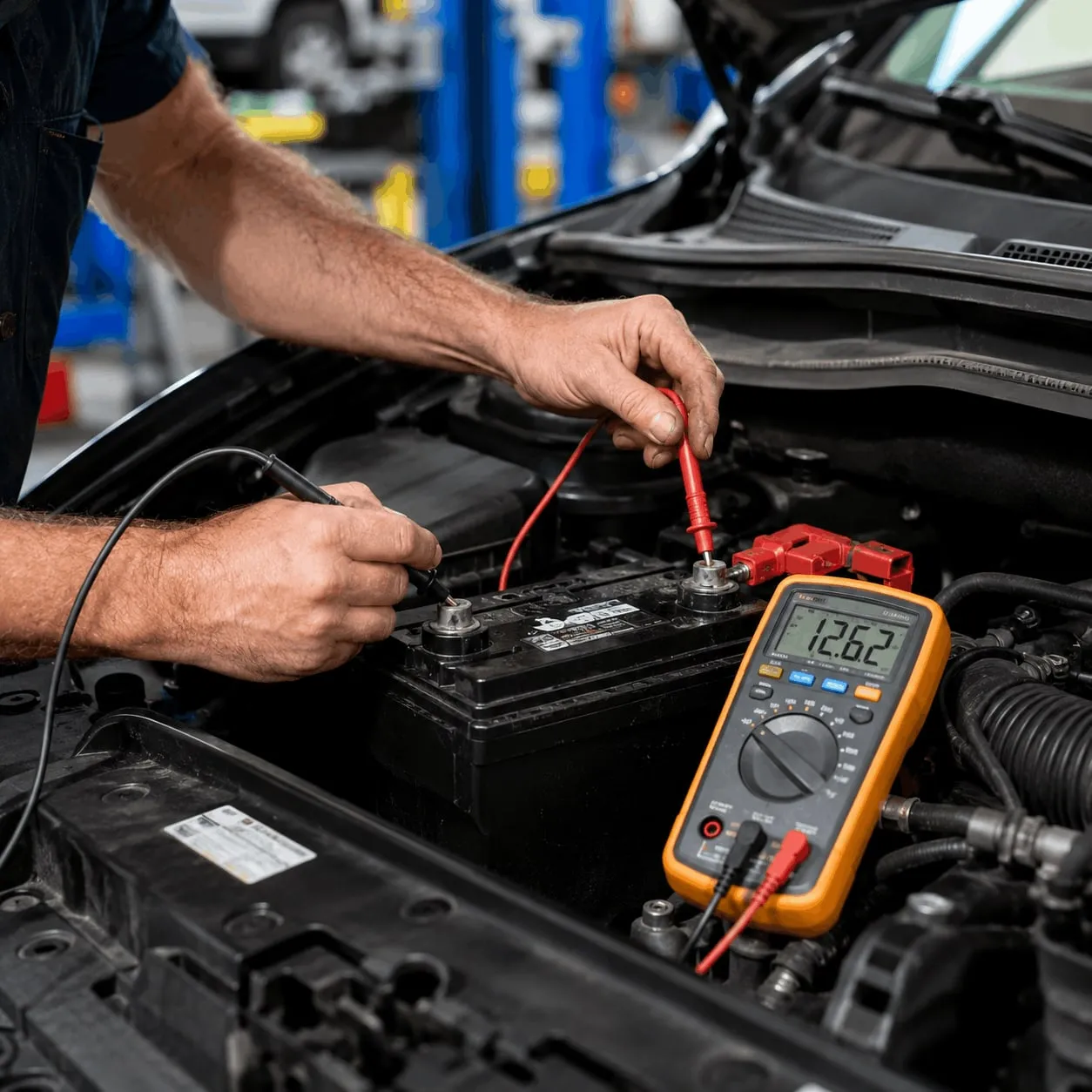
Age alone is not a reason to replace a battery, and it is not a reason to trust one either. From about the second year, a test with a conductance tester gives a clearer picture: it reads state of health and cranking ability against the rating on the label. Test again if the engine starts to crank slowly or the car has needed a jump start.
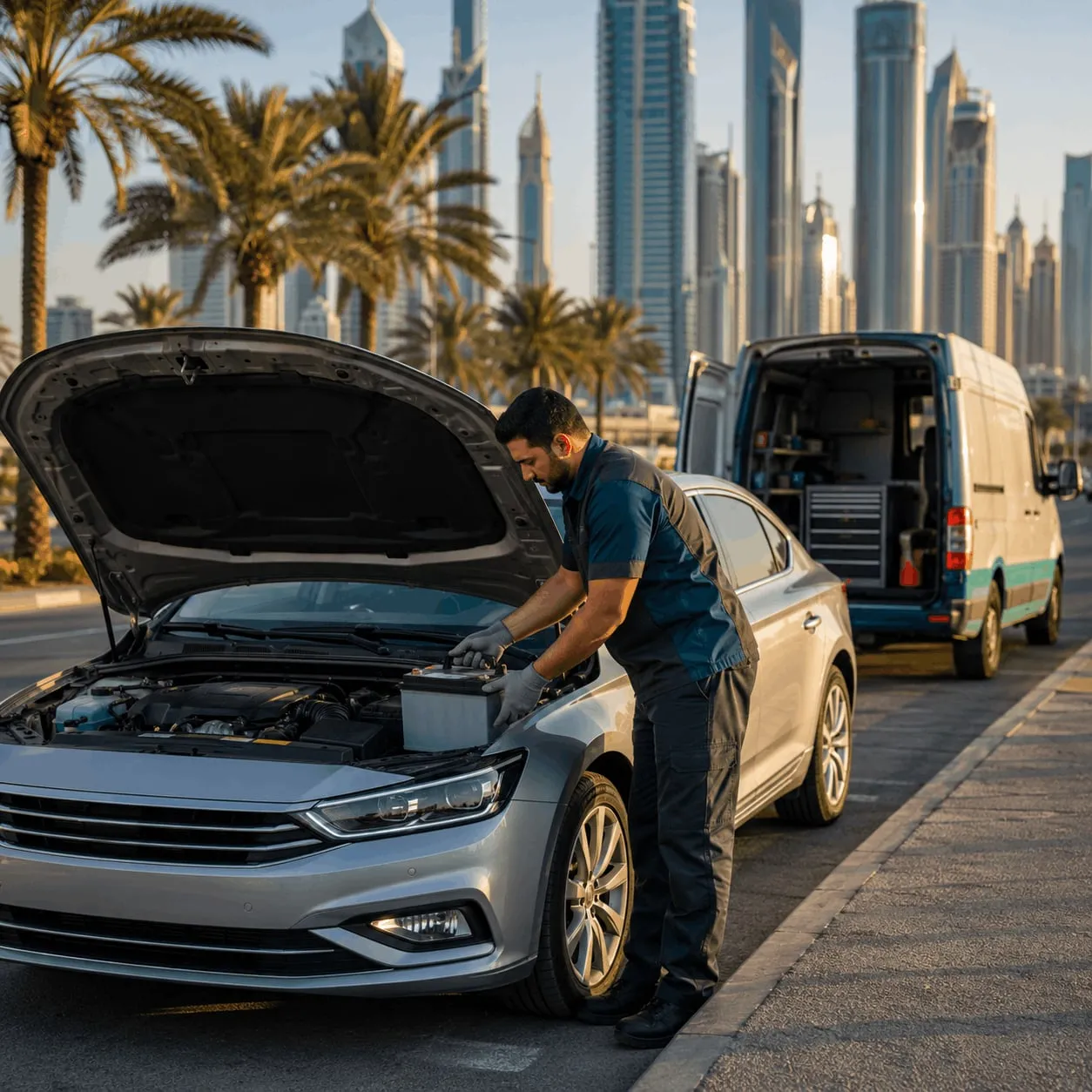
800MyBatt tests the battery where the car is, at home, at the office, in basement parking or at the roadside in Dubai, Abu Dhabi and Sharjah. If the battery is healthy and the fault is elsewhere, we say so. If it needs replacing, the technician fits the correct type on the spot, with a warranty of up to 24 months on the new battery.
Sources
Reviewed by technicians who test and fit car batteries across the UAE every day.